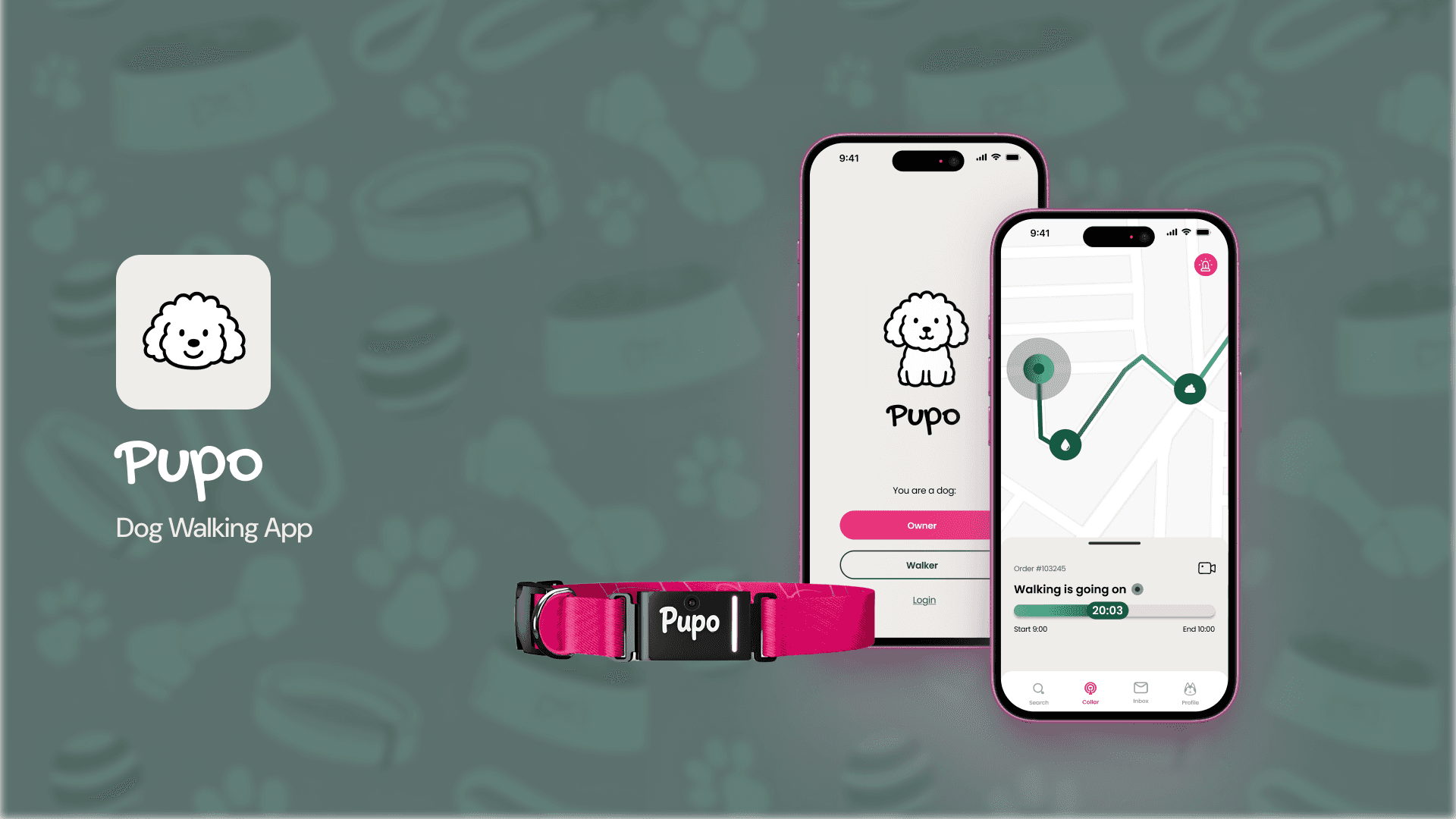
Pupo

A trust-centered dog walking system that pairs a smart collar with a companion app, making care visible when owners cannot be there.
01The worry starts after the handoff.
“Is my dog okay?”
A simple question.
A hard one to answer from work.
Busy owners rely on walkers when they cannot be there. Profiles and reviews help them choose someone, but once the walk begins, they lose visibility. Pupo brings small, meaningful signs of care into that gap.
Peter is a video editor who works late and travels. He needs reliable walks for Betty — and a quick way to know she is safe while he is busy.
Owner
Needs reassurance without constantly checking.
Walker
Needs clear expectations and room to focus on the dog.
Dog
Needs care that responds to their condition, not just a completed route.
Help busy dog owners feel reassured during the walk, even when they cannot be there?
02What would make owners feel safe?
I combined an online survey, interviews with six owners and walkers, and a review of existing dog-walking platforms to understand where trust breaks.
Would you use a dog-walking app?
Would consider it
Would not consider it
Trust and cost were key barriers.
The handoff is the hardest moment.
Reviews help owners choose a walker. Reassurance is still needed when responsibility changes hands.
Show an early sign of care.
A route is not proof of care.
Time and distance do not show how the dog was treated, or whether the dog felt comfortable.
Make the dog’s condition visible.
An alert needs a next step.
When something goes wrong, owners need to understand what happened and what to do next.
Pair the alert with an action.
What I learned → What I designed
Profiles → booking → completed-walk summary
Good for choosing and paying for a walker; limited visibility during the walk.Handoff → signs of care → clear next steps
Reassurance during the walk, with urgent information surfaced when needed.Design directionOwners need a quick “my dog is okay” check, proof of care, and guidance when something goes wrong.
03Less checking. More reassurance.
A small window into the walk.
Not another feed to monitor.
The concept pairs a camera-enabled collar with a companion app. A live glimpse and captured moments help owners understand what is happening. The interface stays calm until something needs attention.
“I just want to know my dog is okay.”
Put the essential status first. Keep detailed information a step away.
Care should not require constant alerts.
Let captured moments and a clear status do the reassuring.
Make the next step obvious.
When something is wrong, explain the signal and surface support.
Why these features belong together
Make meeting the walker optional. A first conversation can help a hesitant owner. Returning owners should still be able to book directly.
Offer a glimpse, not a demand to watch. Live video is available when Peter wants context; captured moments let him check briefly without following the whole walk.
Put the next step beside the alert. A signal alone can increase worry. The proposed emergency flow should explain what needs attention and make support easy to find.

Signals from Betty's point of view.
Context Peter can understand.
04Friendly enough to feel familiar.
Pupo's soft colors, hand-drawn dog and rounded product type make care feel approachable. Pink brings a playful accent; green gives the interface a calmer feel.

Playful · Approachable · Friendly
Gochi Hand
+ Poppins
A handwritten wordmark paired with friendly, readable interface type. The dog character brings a familiar face to a service built around care.
05How care becomes visible.
The collar supplies the view. The app gives it context. The owner knows when to relax — and when to respond.
Observe the walk
A small camera and sensors capture live glimpses and simple signs of the dog's condition.
Make the update understandable
Show captured moments and a clear status instead of an unexplained stream of signals.
Check, then carry on
Get a quick sense of how the walk is going. Receive a clear prompt when attention is needed.
If signs of distress appear, calm gives way to clarity.
The proposed emergency mode alerts the owner and guides the next step. Signal thresholds and behavior detection still need live-data testing across different dogs.
06Peter and Betty's first walk.
Peter is working late, so he arranges a walk for Betty. This scenario follows the experience from choosing a walker to checking in while away. Each step answers a different question: can I trust this person, is Betty okay, and what should I do if she is not?
Build first-time trust
Set up Betty's profile, meet a walker if needed, and book ahead.
Get a little reassurance
Check live video and captured moments without repeatedly messaging the walker.
Know what to do
Find a clear alert and support in one place.
Start with Betty, not a booking form.
Progressive onboarding asks about Betty and Peter's walking preferences. It helps Peter feel that the service understands his dog before he commits to a walk.
An optional step: Meet Your Walker lets Peter meet Liam before booking. Familiar profiles then make scheduling ahead easier.
A quick glimpse while Peter is at work.
Live video and auto-captured photos show Betty's walk as it happens. Peter can check in briefly, then return to his day.
The decision: Put the walk's essential context first, then let Peter open the live view. Captured photos offer a lighter way to check in.
Keep the walker in the picture.
The walk needs to work for both people. Owner–walker coordination stays connected to the service, while the collar supplies reassurance in the background.
The balance: Give Peter visibility while keeping expectations clear for the walker. Reassurance should not depend on repeated messages during the walk.
07Reflection
What I learned
Trust is not built by sending more messages. It comes from showing the right moment clearly — and giving owners room to get on with their day.
What I would improve
The concept is strongest at first-time trust. Next, I would test emergency signals with real walk data, learn what is normal for each dog, and check whether owners and walkers stay aligned over repeated walks.
Does more visibility actually mean less worry?
The next study would put the prototype in front of owners and walkers around three tasks. These are validation goals, not results already achieved.
- First-time booking: Can owners understand the walker and decide whether they need a meet-up before committing?
- A quick check-in: Can they tell how the walk is going without staying in the live view or messaging repeatedly?
- An urgent moment: Can both people understand the alert and identify the next action? The detection itself needs separate testing with real walk data.
I would also check what information walkers can safely provide while caring for the dog, and whether the collar remains comfortable during an actual walk.
A little more visibility.
A little less worry.